Rank #1⚡ 84% Match
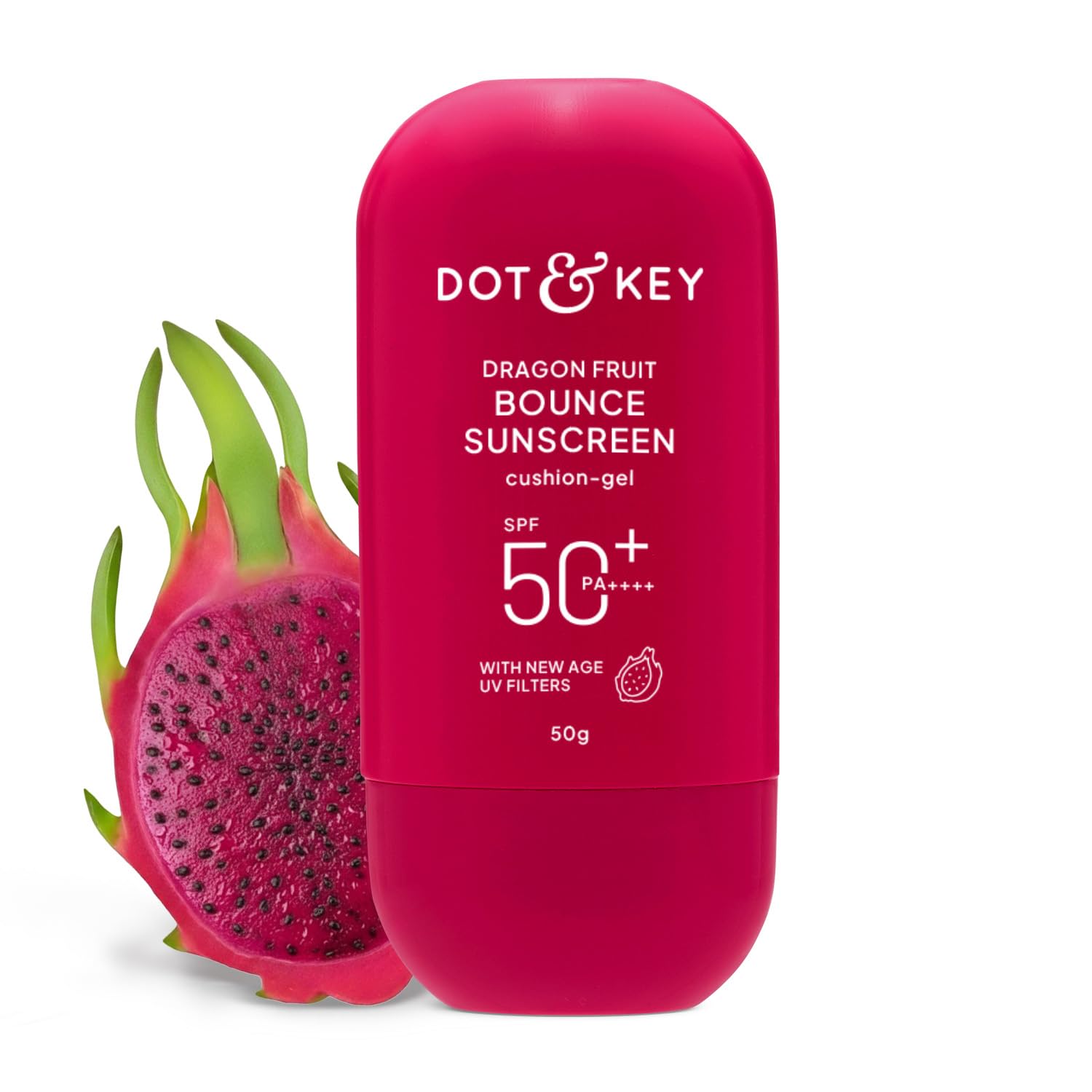 Dot & Key
Dragon Fruit Bounce Sunscreen
SPF 50+PA++++ChemicalGel
Chemical · Gel · Not Reef Safe
Pros & Cons
LikedExceptional photostable broad spectrum UV protection
Rich in ectoin, ceramides, and peptides
No synthetic fragrances or drying alcohols
NoteContains potentially comedogenic algae extract
Ingredients may trigger fungal acne
Propylene glycol may irritate sensitive skin
Rank #2⚡ 58% Match
 Dot & Key
Strawberry Sunscreen Stick
SPF 50+PA++++ChemicalStick
Chemical · Stick · Not Reef Safe
Pros & Cons
LikedExcellent broad spectrum UV protection
Highly water and sweat resistant
Leaves absolutely no white cast
NoteContains potential endocrine disrupting filters
Highly comedogenic and pore clogging
Unsafe for coral reef environments
Rank #3⚡ 58% Match
 Dot & Key
Cica + Niacinamide Sunscreen
SPF 50+PA++++Hybrid Chemical DominantCream
Hybrid Chemical Dominant · Cream · Not Reef Safe
Pros & Cons
LikedProvides excellent broad-spectrum UV protection
Includes hydrating ceramides and peptides
Completely free of synthetic fragrance
NoteMissing marketed cica and niacinamide
Contains suspected endocrine-disrupting UV filters
Unsafe for Malassezia-prone skin
Rank #4⚡ 54% Match
 Dot & Key
Mango Detan Sunscreen
SPF 50+PA+++Hybrid Chemical DominantCream
Hybrid Chemical Dominant · Cream · Not Reef Safe
Pros & Cons
LikedExcellent SPF 50+ UVB protection
Zero synthetic fragrance or drying alcohol
Rich in antioxidants and soothing agents
NoteContains known endocrine disrupting UV filters
High risk of eye area stinging
Unsafe for pregnant or nursing individuals
Rank #5⚡ 52% Match
 Dot & Key
Watermelon Cooling Sunscreen
SPF 50+PA++++Hybrid Chemical DominantCream
Hybrid Chemical Dominant · Cream · Not Reef Safe
Pros & Cons
LikedExcellent broad-spectrum UV protection
Hydrating formula with strong antioxidants
Lightweight and non-greasy skin finish
NoteContains hormone-disrupting oxybenzone and octinoxate
High risk of eye stinging
Not safe for fungal acne
Rank #6⚡ 48% Match
 Dot & Key
Strawberry Dew Tinted Sunscreen
SPF 50+PA++++Hybrid Chemical DominantLotion
Hybrid Chemical Dominant · Lotion · Not Reef Safe
Pros & Cons
LikedHigh SPF 50+ broad spectrum protection
Tinted finish leaves no white cast
Free from drying alcohols and fragrance
NoteContains endocrine disrupting chemical filters
High risk of eye stinging
Contains fungal acne triggering ingredients
Rank #7⚡ 46% Match
 Dot & Key
Vitamin C + E Sunscreen
SPF 50+PA++++Hybrid BalancedLotion
Hybrid Balanced · Lotion · Not Reef Safe
Pros & Cons
LikedProvides strong broad-spectrum UV protection
Rich in synergistic antioxidant vitamins
Leaves a lightweight, non-greasy finish
NoteContains endocrine-disrupting chemical UV filters
Citrus extract poses phototoxicity risk
High risk of eye stinging
Rank #8⚡ 45% Match
 Dot & Key
Strawberry Sunscreen Face Mist
SPF 50+PA+++ChemicalSpray
Chemical · Spray · Not Reef Safe
Pros & Cons
LikedExcellent broad spectrum UV protection
Strong hydrating and antioxidant benefits
Lightweight and non-comedogenic finish
NoteSevere eye sting risk
Contains suspected endocrine disruptors
High coral reef toxicity risk
Rank #9⚡ 42% Match
 Dot & Key
Barrier Repair Sunscreen
SPF 50+PA++++Hybrid Chemical DominantCream
Hybrid Chemical Dominant · Cream · Not Reef Safe
Pros & Cons
LikedStrong broad-spectrum UV protection.
Includes barrier-repairing ceramides and peptides.
Completely free of synthetic fragrance.
NoteContains controversial oxybenzone and octinoxate.
High risk of eye stinging.
Highly unsuitable for fungal acne.