
 1 / 7
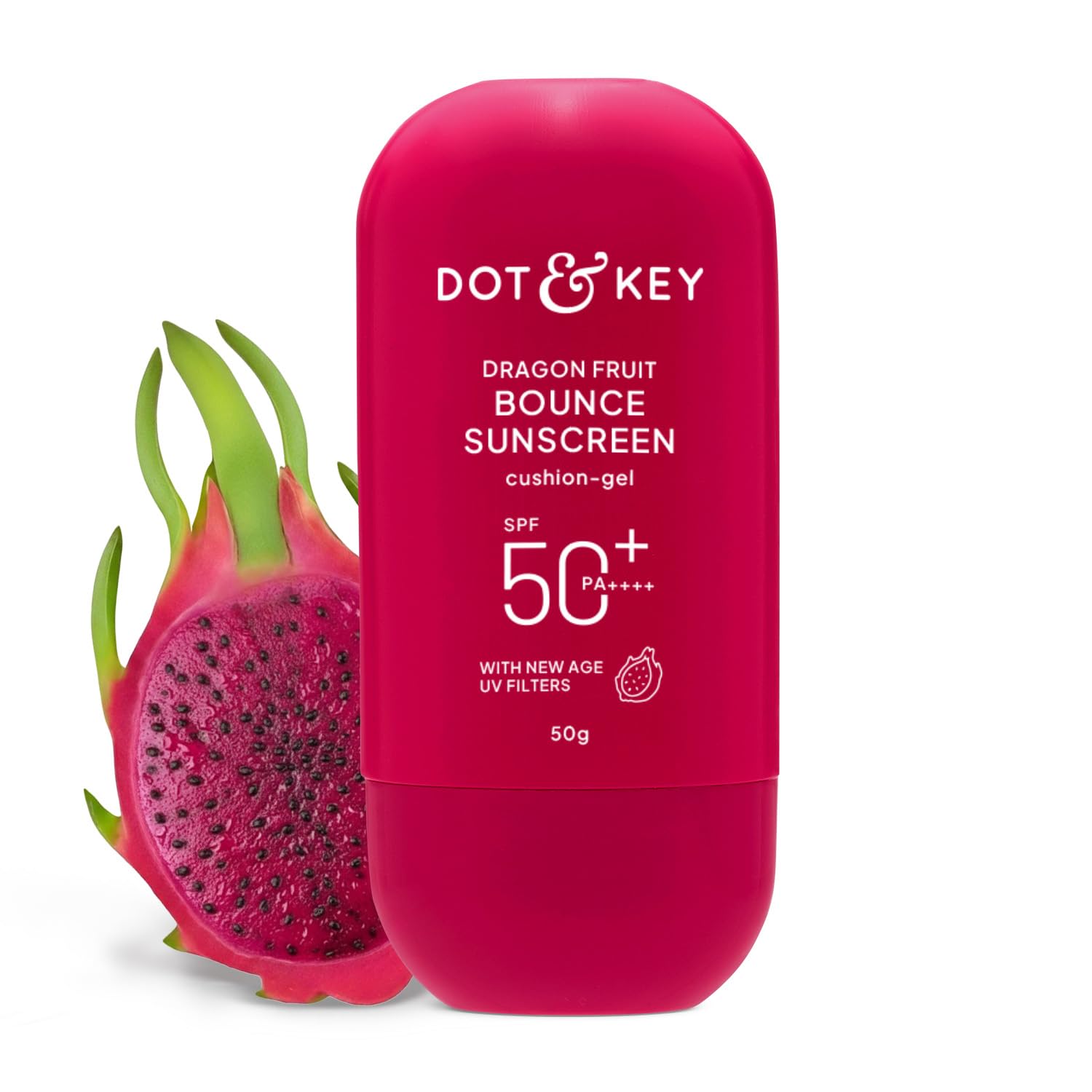
1 / 7Dragon Fruit Bounce Sunscreen SPF 50+
Exceptional photostable broad spectrum UV protection
Skin Type Match
Lightweight · Comedogenic · Protective
- Lightweight breathable feel
- Excellent UV protection
- Deeply hydrating formula
- Potentially pore clogging
- Contains algae extract
- Not fully matte
Performance Scores
SPF Level
Excellent
SPF Level
The presence of Ensulizole (peak absorption ~302 nm) and Ethylhexyl Triazone (peak absorption ~314 nm) provides robust, targeted attenuation of UVB rays.
Broad Spectrum
Excellent
Broad Spectrum
Diethylamino Hydroxybenzoyl Hexyl Benzoate (peak 354 nm), Methylene Bis-Benzotriazolyl Tetramethylbutylphenol (peak 360 nm), and Ecamsule (peak 344 nm) provide redundant, robust absorption across the critical 340-400 nm UVA I spectrum.
Sweat Resistance
Poor
Sweat Resistance
The inclusion of Ammonium Acryloyldimethyltaurate/VP Copolymer, Polyacrylate Crosspolymer-6, and Dimethicone creates a soft, flexible film that offers trace moisture resistance.
Photo Stability
Excellent
Photo Stability
Cosmetic science literature confirms that Diethylamino Hydroxybenzoyl Hexyl Benzoate, Ecamsule, Tinosorb S, and Tinosorb M possess outstanding intrinsic photostability and do not require additional stabilization.
Visible Light
Poor
Visible Light
There is a complete absence of iron oxide color indices (e.g., CI 77491, CI 77492, CI 77499) or non-nano pigmentary minerals in the ingredient list.
Irritation Risk
Medium Risk
Irritation Risk
Propylene glycol is a documented contact allergen (ACDS Allergen of the Year 2018), while triethanolamine, used here to neutralize ensulizole, can cause mild irritation.
Pore Clogging
High Risk
Pore Clogging
Traditional dermatological grading (Fulton scale) rates marine algae extracts like Laminaria Digitata as highly comedogenic (up to 5/5) due to iodine-induced follicular hyperkeratinization.
White Cast
Low Risk
White Cast
Methylene Bis-Benzotriazolyl Tetramethylbutylphenol (Tinosorb M) is an insoluble organic particulate filter that scatters visible light, leading to mild reflectance (Photodermatol Photoimmunol Photomed).
Ingredients Analysis
Active Filters
C12-15 Alkyl Benzoate (and) Diethylamino Hydroxybenzoyl Hexyl Benzoate (and) Ethylhexyl Triazone (and) Bis-Ethylhexyloxyphenol Methoxyphenyl Triazine (and) Propanediol (and) Lecithin (and) Phenoxyethanol (and) Hydroxyacetophenone Broad Spectrum UV
Certain filters in this blend such as bemotrizinol are banned in Palau due to environmental persistence and potential harm to coral reef ecosystems [2.12].
Ensulizole UVB
In vitro studies suggest it can generate reactive oxygen species upon UV exposure which may lead to cellular damage though real world impact is debated.
Methylene Bis-Benzotriazolyl Tetramethylbutylphenol (and) Aqua (and) Decyl Glucoside (and) Propylene Glycol (and) Xanthan Gum Broad Spectrum UV
Approved up to 10 percent in the European Union and other regions but remains unapproved by the US FDA due to strict monograph data requirements [1.4]
Key Inactive Ingredients
Triethanolamine pH Adjuster
May react with nitrosating agents in formulations to form nitrosamines which are potential carcinogens.
Propylene Glycol Solvent
Recognized as a frequent cause of allergic contact dermatitis especially in individuals with eczema or compromised skin barriers.
Hylocereus Undatus Fruit Extract(and) Propylene Glycol (and) Sodium Benzoate (and) Phenoxyethanol (and) Ethylhexylglycerin (and) Aqua Skin Conditioning
Contains propylene glycol and phenoxyethanol which are known to occasionally trigger allergic contact dermatitis and skin sensitization in individuals with reactive skin.
Glycerin (and) Aqua (and) Butylene Glycol (and) Carbomer (and) Polysorbate 20 (and) Palmitoyl Tripeptide-1 (and) Palmitoyl Tetrapeptide-7 Skin Conditioning
This blend contains Polysorbate 20, an ethoxylated emulsifier that can be contaminated with trace amounts of 1,4-dioxane, a probable human carcinogen formed during manufacturing [3.4].
Laminaria Digitata Extract (and) Hydrogenated Lecithin (and) Cetyl-PG Hydroxyethyl Palmitamide (and) Ceramide 1,2,3,4,6II (and) Cholesterol (and) 1,2-Hexanediol Skin Conditioning
Some skincare resources categorize Laminaria Digitata and other seaweed extracts as potentially comedogenic for acne prone individuals possibly due to their high iodine content though this is debated [2.5].
Disodium EDTA Chelating Agent
Poorly biodegradable in the environment and can accumulate in aquatic ecosystems where it may mobilize heavy metals.
Phenoxyethanol (and) Ethylhexylglycerin Preservative
Regulated globally and recognized as safe by the EU Scientific Committee on Consumer Safety when used at a maximum concentration of one percent[2].