
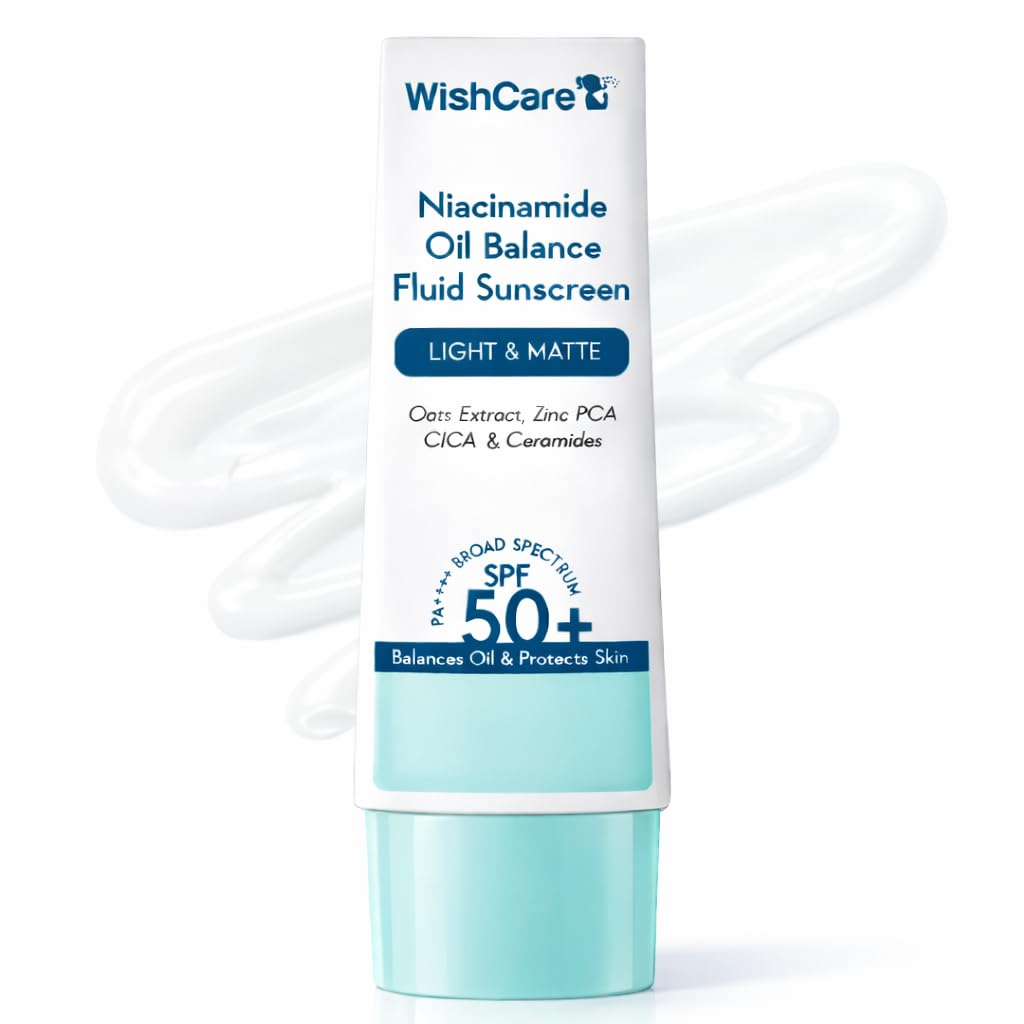
 1 / 6
1 / 6Niacinamide Oil Balance Fluid Sunscreen SPF 50
Excellent broad-spectrum UV protection.
Most Suitable For
Skin Type Match
Matte · Powdery · Fluid
- Rich in ceramides
- Strong UV protection
- Hydrating humectant complex
- Overly matte finish
- Emphasizes dry texture
- Severe eye stinging
Performance Scores
SPF Level
Excellent
SPF Level
Label claims SPF 50, supported by the presence of Octisalate, Octocrylene, Homosalate, Zinc Oxide, and Titanium Dioxide in the formulation.
Broad Spectrum
Excellent
Broad Spectrum
Avobenzone (peak 357 nm) and Zinc Oxide (peak 370 nm) provide overlapping continuous absorption across the 340-400 nm UVA I spectrum, justifying the PA++++ rating.
Sweat Resistance
Poor
Sweat Resistance
Contains basic polymeric thickeners like AMPS/HEMA Crosspolymer and Cyclopentasiloxane, but lacks the robust hydrophobic film-forming polymers required for verifiable water resistance.
Photo Stability
Excellent
Photo Stability
Photobiology literature confirms Octocrylene acts as an effective triplet-state quencher to prevent the UV-induced degradation of Avobenzone.
Visible Light
Poor
Visible Light
Complete absence of iron oxide colour indices (e.g., CI 77491, CI 77492, CI 77499) or pigmentary-grade non-white minerals in the ingredient list.
Irritation Risk
Medium Risk
Irritation Risk
Octocrylene and avobenzone are documented in dermatological literature as potential causes of photoallergy and irritant contact dermatitis.
Pore Clogging
Low Risk
Pore Clogging
Clinical comedogenicity scales rate the primary vehicle ingredients and chemical UV filters at 0/5, with minor ester and fatty alcohol ingredients like octyldodecanol typically scoring 1-2/5.
White Cast
Low Risk
White Cast
Mineral UV filters at low estimated concentrations in a volatile silicone and chemical filter base typically dry down with negligible visible reflectance.
Ingredients Analysis
Active Filters
Octisalate UVB
Clinical trials demonstrate systemic absorption into the bloodstream exceeding the FDA threshold requiring further safety testing.
Avobenzone UVA I / UVA II
Rapidly degrades under UV exposure losing significant UVA protection capacity unless stabilized by other filters.
Octocrylene UVB / UVA II
Banned in several jurisdictions due to evidence of coral toxicity and accumulation in marine life.
Homosalate UVB
Laboratory studies indicate homosalate may act as an endocrine disruptor by interfering with hormone systems [1.1].
Titanium Dioxide UVB / UVA II
Classified as a possible human carcinogen if inhaled making spray and powder formulations a potential risk while dermal application remains safe
Key Inactive Ingredients
Cyclopentasiloxane Emollient
The European Union is restricting this ingredient to a maximum concentration of one tenth of a percent in leave on cosmetics effective June 2027.
Polysorbate 20 Surfactant
As an ethoxylated ingredient, it may contain trace amounts of 1,4 dioxane and ethylene oxide, which are potential carcinogens linked to the manufacturing process.
Oat Extract Skin Conditioning
Although generally hypoallergenic repeated topical application of oat proteins on severely compromised skin such as in children with atopic dermatitis may increase the risk of epicutaneous sensitization [1.5].
Ethylhexylglycerin Preservative
Recognized as a rare but emerging cause of allergic contact dermatitis, particularly in leave-on cosmetic products.
Phenoxyethanol Preservative
Generally well tolerated but can cause contact dermatitis or skin irritation in rare cases, particularly in sensitive individuals.
Coco-Glucoside Surfactant
Alkyl glucosides are recognized as emerging contact allergens that can cause allergic contact dermatitis particularly in individuals with compromised skin barriers [1.3].