
 1 / 8
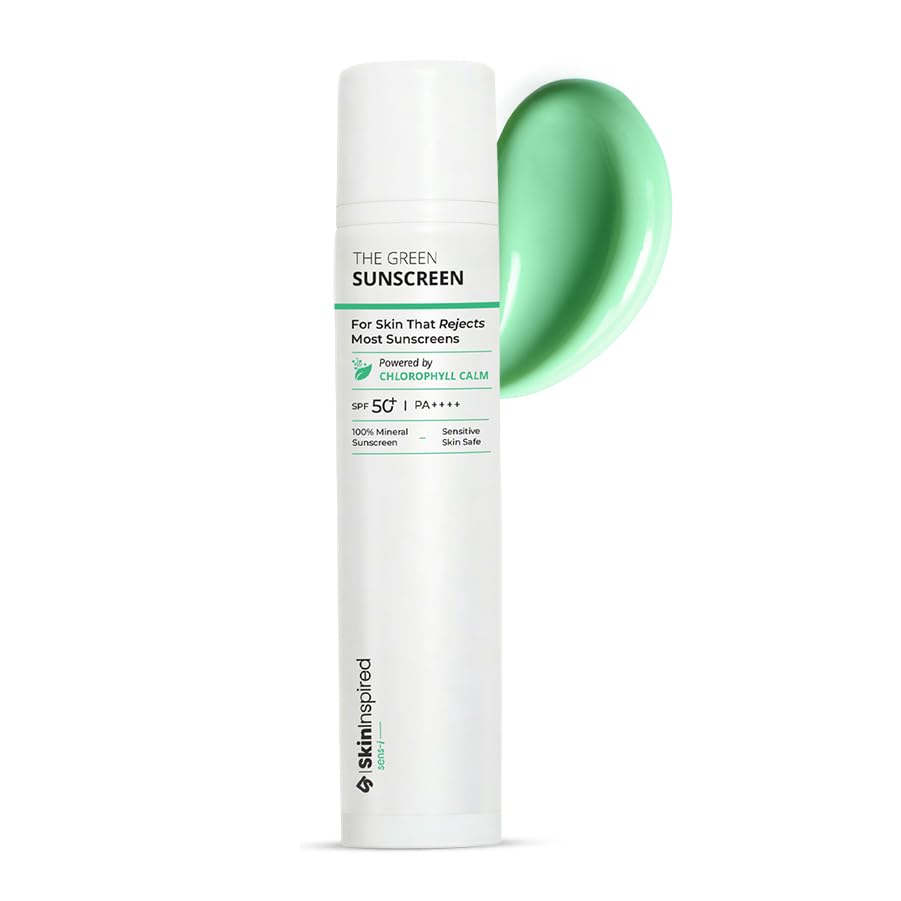
1 / 8The Green Sunscreen SPF 50+
Excellent broad-spectrum SPF 50+ protection
Most Suitable For
Skin Type Match
Brightening · Protective · Soothing
- High UVA protection
- Brightening licorice root
- Strong anti-inflammatory
- No iron oxides
- Noticeable white cast
- Not water resistant
Performance Scores
SPF Level
Excellent
SPF Level
The presence of Zinc Oxide and Titanium Dioxide high in the active ingredient list provides a solid foundation for the stated SPF 50+ claim.
Broad Spectrum
Excellent
Broad Spectrum
Zinc Oxide provides robust UVA I coverage up to 370-400 nm, which perfectly bridges the UVA II and UVB protection primarily supplied by Titanium Dioxide.
Sweat Resistance
Poor
Sweat Resistance
Ingredients like Dimethicone Crosspolymer and Cyclopentasiloxane are recognized in cosmetic science as providing film-forming properties that impart slight water and wash-off resistance.
Photo Stability
Excellent
Photo Stability
Cosmetic science literature confirms that Zinc Oxide and Titanium Dioxide function without undergoing the photolytic degradation pathways common to many organic UV filters.
Visible Light
Poor
Visible Light
The ingredient list contains zero iron oxide color indices, relying only on Chlorophyll which does not satisfy the pigmentary mineral requirement for physical visible light attenuation.
Irritation Risk
Low Risk
Irritation Risk
Zinc oxide and titanium dioxide are widely recognized by dermatologists as the least irritating UV filters, making them highly suitable for sensitive or compromised skin.
Pore Clogging
Low Risk
Pore Clogging
Clinical comedogenicity databases typically rate tocopherol between 2/5 and 3/5, but its placement at position 17 indicates a trace antioxidant level with negligible pore-clogging risk.
White Cast
High Risk
White Cast
High-concentration combinations of non-tinted mineral filters consistently produce high diffuse reflectance of visible light on Fitzpatrick III-VI skin (J Am Acad Dermatol).
Ingredients Analysis
Active Filters
Titanium Dioxide UVB / UVA II
Classified as a possible human carcinogen if inhaled making spray and powder formulations a potential risk while dermal application remains safe
Key Inactive Ingredients
Aloe Vera Extract Skin Conditioning
Unpurified whole leaf aloe extracts may contain anthraquinones like aloin which have shown carcinogenic potential in oral animal studies but cosmetic grade aloe is decolorized to safely limit these compounds to below 50 parts per million [1.3].
Cyclopentasiloxane Emollient
The European Union is restricting this ingredient to a maximum concentration of one tenth of a percent in leave on cosmetics effective June 2027.
PEG-12 Dimethicone Emulsifier
PEG compounds may contain trace amounts of 1,4 dioxane and ethylene oxide which are probable carcinogens produced as byproducts of the ethoxylation manufacturing process.
Bisabolol Skin Conditioning
While widely recognized as a skin-soothing agent, it can occasionally cause allergic contact dermatitis in individuals with pre-existing sensitivities to Compositae (aster and daisy family) plants [1.3.2].
Phenoxyethanol Preservative
Generally well tolerated but can cause contact dermatitis or skin irritation in rare cases, particularly in sensitive individuals.