
 1 / 7
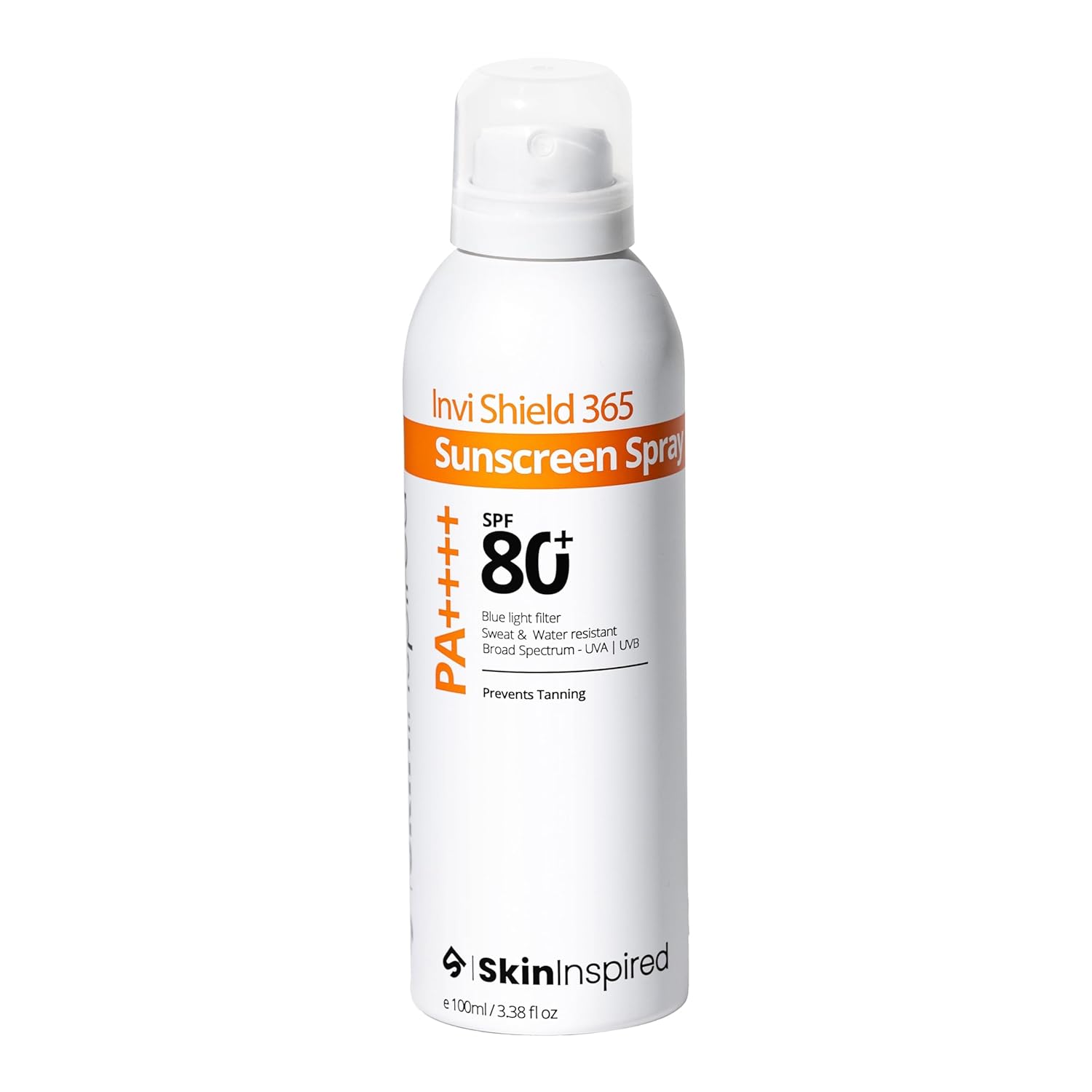
1 / 7Invi Shield 365 Body Sunscreen Spray SPF 80+
Very high SPF 80+ UVB protection
Skin Type Match
Sensitizing · Drying · Matte
- High SPF protection
- Non-comedogenic formula
- Matte dry finish
- Highly irritating alcohol
- Contains synthetic fragrance
- Severe sting risk
Performance Scores
SPF Level
Excellent
SPF Level
Label claims SPF 80+, corroborated by a multi-filter UVB system including Homosalate, Octinoxate, Octisalate, and Iscotrizinol.
Broad Spectrum
Excellent
Broad Spectrum
Absorption data confirms Avobenzone peaks at 357 nm for critical UVA I defense, while Bemotrizinol provides continuous absorption from 280 nm to 400 nm.
Sweat Resistance
Poor
Sweat Resistance
The only film-forming agent present is Polyvinylpyrrolidone (PVP K-30), a highly water-soluble polymer that washes away easily upon contact with moisture.
Photo Stability
Poor
Photo Stability
Photobiology literature indicates that Octinoxate and Avobenzone form an unstable combination that degrades rapidly under UV light unless stabilized by high concentrations of specific triplet-quenchers.
Visible Light
Poor
Visible Light
Complete absence of iron oxides (e.g., CI 77491, CI 77492, CI 77499) and pigmentary-grade mineral filters in the ingredient list.
Irritation Risk
High Risk
Irritation Risk
High concentrations of short-chain alcohols profoundly disrupt the epidermal lipid barrier, exacerbating the penetration and irritancy of synthetic fragrances and chemical UV filters.
Pore Clogging
Low Risk
Pore Clogging
Established dermatological comedogenicity models rate ethanol, cosmetic propellants, and the included chemical UV filters (such as homosalate and octinoxate) at 0/5.
White Cast
Low Risk
White Cast
Organic UV filters like homosalate, octinoxate, and avobenzone absorb UV radiation without scattering visible light (Photodermatol Photoimmunol Photomed).
Ingredients Analysis
Active Filters
Homosalate UVB
Laboratory studies indicate homosalate may act as an endocrine disruptor by interfering with hormone systems [1.1].
Octinoxate UVB
Studies indicate potential estrogenic and thyroid disrupting activity in animal models and human cell lines.
Octisalate UVB
Clinical trials demonstrate systemic absorption into the bloodstream exceeding the FDA threshold requiring further safety testing.
Avobenzone UVA I / UVA II
Rapidly degrades under UV exposure losing significant UVA protection capacity unless stabilized by other filters.
Bis-Ethylhexyloxyphenol Methoxyphenyl Triazine Broad Spectrum UV
Although widely tolerated and nonirritating for most users recent dermatological reports identify it as an emerging allergen capable of causing rare cases of allergic contact dermatitis [2.1]
Key Inactive Ingredients
Ethanol Solvent
High concentrations can strip the skin of natural lipids and cause dryness, occasionally leading to irritant or allergic contact dermatitis in sensitive individuals [1.7].
Propellant Other
Certain cosmetic propellants, particularly hydrofluorocarbons (HFCs) and high-VOC hydrocarbons, face environmental regulatory phase-outs and regional restrictions due to their global warming potential and impact on air quality.
Fragrance Fragrance
Undisclosedfragranceblendsareamongthemostcommoncausesofcontactdermatitisandskinsensitizationincosmeticproducts[1.6].
Polysorbate 20 Surfactant
As an ethoxylated ingredient, it may contain trace amounts of 1,4 dioxane and ethylene oxide, which are potential carcinogens linked to the manufacturing process.
Phenoxyethanol Preservative
Generally well tolerated but can cause contact dermatitis or skin irritation in rare cases, particularly in sensitive individuals.
Triethylene Glycol Solvent
Should not be used on damaged skin due to the risk of systemic toxicity and contact dermatitis as observed with similar PEG based ointments in burn patients [1.5].
BHT Antioxidant
Some animal studies suggest high oral doses may cause endocrine disruption, though regulatory bodies consider it safe at the low concentrations used in cosmetics.
Sodium Nitrate Preservative
Can react with secondary or tertiary amines in formulations to form nitrosamines which are potent human carcinogens.