
 1 / 6
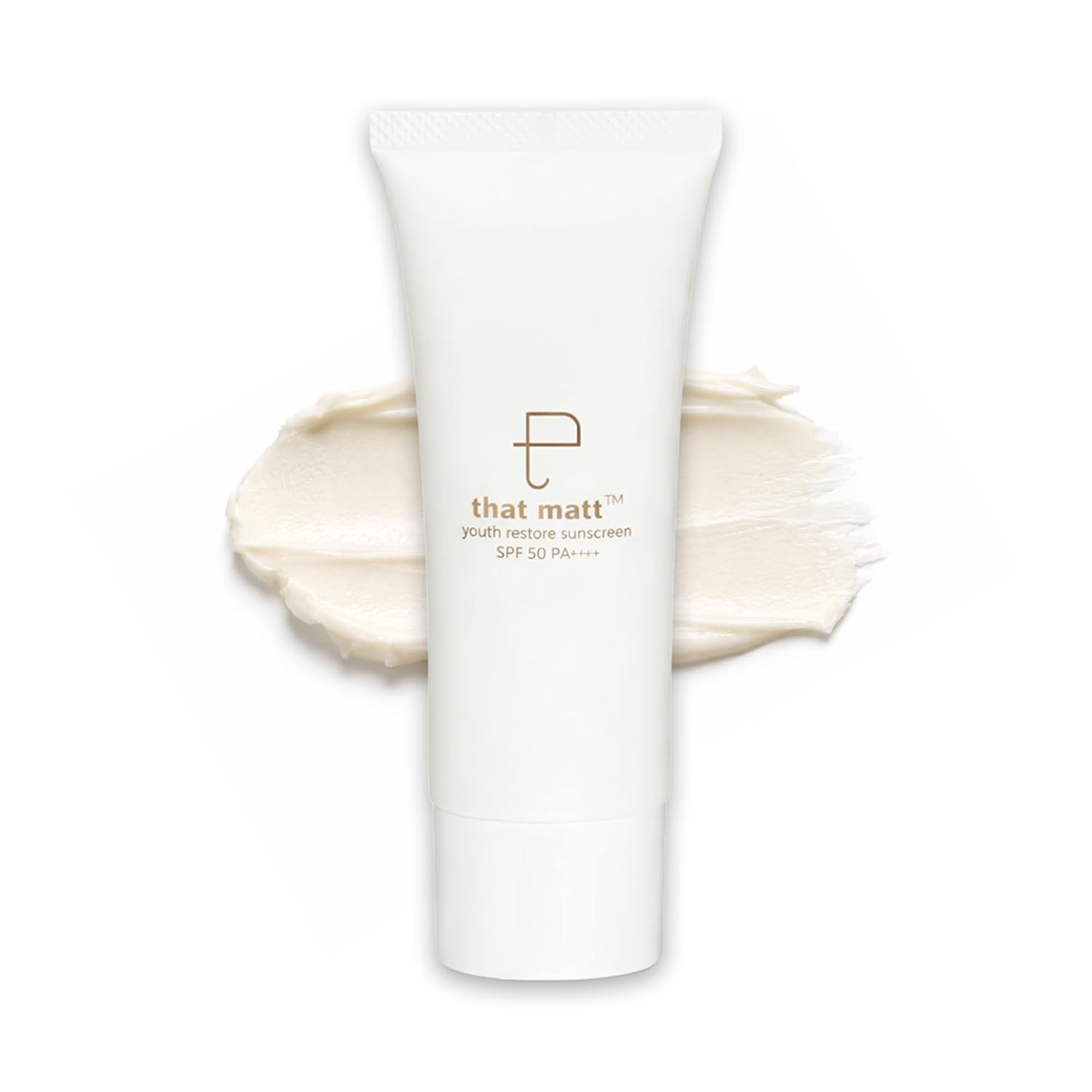
1 / 6Thatmatt Oil-Control Hybrid Sunscreen SPF 50
Provides excellent broad-spectrum UV protection
Most Suitable For
Skin Type Match
Protective · Antioxidant · Matte
- High UVA protection
- Strong SPF rating
- Rich in antioxidants
- Lacks iron oxides
- Contains endocrine disruptors
- Potential white cast
Performance Scores
SPF Level
Excellent
SPF Level
The presence of Octinoxate, Iscotrizinol, and Titanium Dioxide provides strong, overlapping UVB absorption confirming the SPF 50 claim.
Broad Spectrum
Excellent
Broad Spectrum
Zinc Oxide and Bemotrizinol (Tinosorb S) provide continuous coverage up to 400 nm, which is heavily reinforced in the UVA I range by DHHB peaking at 354 nm.
Sweat Resistance
Poor
Sweat Resistance
Ingredients like Dimethicone/Vinyl Dimethicone Crosspolymer and Caesalpinia Spinosa Fruit Pod Extract provide strong film-forming infrastructure, but clinical water resistance testing claims are absent.
Photo Stability
Excellent
Photo Stability
The formulation includes Diethylhexyl Syringylidenemalonate, a recognized singlet oxygen quencher, alongside highly stable filters like Bemotrizinol and Iscotrizinol to prevent UV-induced degradation.
Visible Light
Poor
Visible Light
Absence of iron oxide color indices (e.g., CI 77491, CI 77492, CI 77499) or visibly tinted agents in the ingredient list.
Irritation Risk
Low Risk
Irritation Risk
Propylene glycol is present but positioned very low on the label, significantly reducing its potential to cause irritant contact dermatitis.
Pore Clogging
High Risk
Pore Clogging
Clinical comedogenicity assays consistently assign isostearic acid a high rating of 4/5 to 5/5 due to its capacity to induce follicular hyperkeratosis.
White Cast
Medium Risk
White Cast
Un-tinted mineral filters at these concentrations consistently cause noticeable reflectance and ashy cast on Fitzpatrick IV-VI skin profiles.
Ingredients Analysis
Active Filters
Octinoxate UVB
Studies indicate potential estrogenic and thyroid disrupting activity in animal models and human cell lines.
Titanium Dioxide UVB / UVA II
Classified as a possible human carcinogen if inhaled making spray and powder formulations a potential risk while dermal application remains safe
Bemotrizinol Broad Spectrum UV
Identified in recent dermatological literature as a rare but emerging cause of allergic contact dermatitis.
Key Inactive Ingredients
Cyclopentasiloxane Emollient
The European Union is restricting this ingredient to a maximum concentration of one tenth of a percent in leave on cosmetics effective June 2027.
PEG-12 Dimethicone/PPG-20 Crosspolymer Sensory Modifier
As an ethoxylated and propoxylated compound, it carries a risk of trace contamination with 1,4-dioxane and ethylene oxide, which are probable human carcinogens [2.1].
Isostearic Acid Skin Conditioning
Frequently flagged in dermatological databases as having a high comedogenic rating, meaning it has the potential to clog pores and exacerbate acne in susceptible individuals [2.5].
Sunflower Sprout Extract Skin Conditioning
The Cosmetic Ingredient Review panel concluded there is currently insufficient data to fully evaluate the safety of sunflower sprout extract, specifically requesting more information on its potentially allergenic 2S albumin protein content [2.8].
Propylene Glycol Solvent
Recognized as a frequent cause of allergic contact dermatitis especially in individuals with eczema or compromised skin barriers.
Phenoxyethanol Preservative
Generally well tolerated but can cause contact dermatitis or skin irritation in rare cases, particularly in sensitive individuals.
Sodium Benzoate Preservative
Cancauseallergiccontactdermatitisandnonimmunologiccontacturticariacharacterizedbyrednessandwheals, thoughitisgenerallywelltoleratedbymostindividuals[1.5].
Diethylhexyl Syringylidenemalonate UV Stabilizer
Controversially used in sunscreen doping to artificially boost SPF in products marketed as purely mineral, effectively acting as an undisclosed chemical UV filter to bypass active ingredient regulations [2.4].