
 1 / 9
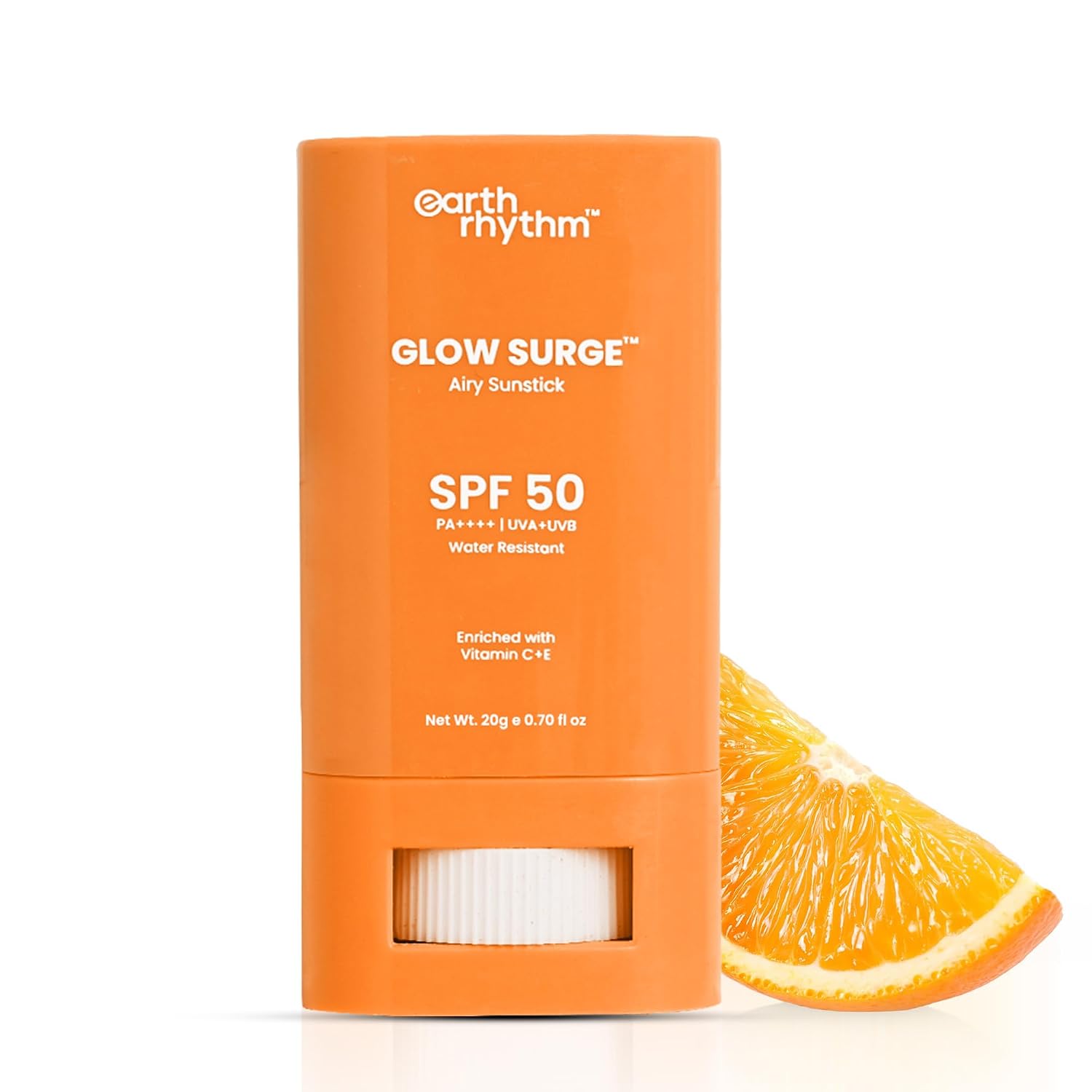
1 / 9GLOW SURGE SUNSTICK SPF 50
High broad spectrum UV protection
Most Suitable For
Skin Type Match
Non-comedogenic · Occlusive · Protective
- Low comedogenicity risk
- Soothes skin inflammation
- Low irritation potential
- Occlusive stick format
- May trap sebum
- Conflicts with exfoliants
Performance Scores
SPF Level
Excellent
SPF Level
Label claims SPF 50, which is structurally corroborated by the inclusion of Zinc Oxide, Octinoxate, Homosalate, and Bemotrizinol.
Broad Spectrum
Excellent
Broad Spectrum
Bemotrizinol provides peak absorption at 345 nm and Zinc Oxide extends protection up to 400 nm, effectively blanketing the entire critical UVA spectrum.
Sweat Resistance
Excellent
Sweat Resistance
Ingredients like Cyclopentasiloxane, Phenyl Trimethicone, and Dibutyl Lauroyl Glutamide form a robust, highly water-repellent gel and polymeric film on the skin.
Photo Stability
Fair
Photo Stability
Cosmetic chemistry literature shows Bemotrizinol acts as an effective stabilizer for photolabile organic filters, though Octinoxate remains vulnerable to degradation.
Visible Light
Poor
Visible Light
The ingredient list is devoid of iron oxide color indices (e.g., CI 77491, CI 77492, CI 77499) and relies on clear gelling agents characteristic of an invisible stick format.
Irritation Risk
Low Risk
Irritation Risk
Ingredients like zinc oxide, cyclopentasiloxane, and caprylic/capric triglyceride are widely recognized in dermatological literature as non-irritating and barrier-supportive.
Pore Clogging
Low Risk
Pore Clogging
Clinical comedogenicity scales evaluate the primary lipids present (caprylic/capric triglyceride and sunflower seed oil) at 0 to 2 out of 5, indicating a low risk of follicular occlusion.
White Cast
Medium Risk
White Cast
Non-tinted zinc oxide particulate filters scatter visible light, consistently producing a white cast on Fitzpatrick skin types IV-VI (J Am Acad Dermatol).
Ingredients Analysis
Active Filters
Octinoxate UVB
Studies indicate potential estrogenic and thyroid disrupting activity in animal models and human cell lines.
Homosalate UVB
Laboratory studies indicate homosalate may act as an endocrine disruptor by interfering with hormone systems [1.1].
Bemotrizinol Broad Spectrum UV
Identified in recent dermatological literature as a rare but emerging cause of allergic contact dermatitis.
Key Inactive Ingredients
Cyclopentasiloxane Emollient
The European Union is restricting this ingredient to a maximum concentration of one tenth of a percent in leave on cosmetics effective June 2027.
Phenyl Trimethicone Emollient
May contain trace amounts of cyclic siloxanes (such as D4 and D5) from the manufacturing process, which are restricted in the EU due to environmental bioaccumulation concerns [2.7].
Methyl Methacrylate Crosspolymer Sensory Modifier
Functions as a synthetic polymer microbead that is often classified as a microplastic, raising concerns about environmental persistence and marine pollution.