
 1 / 6
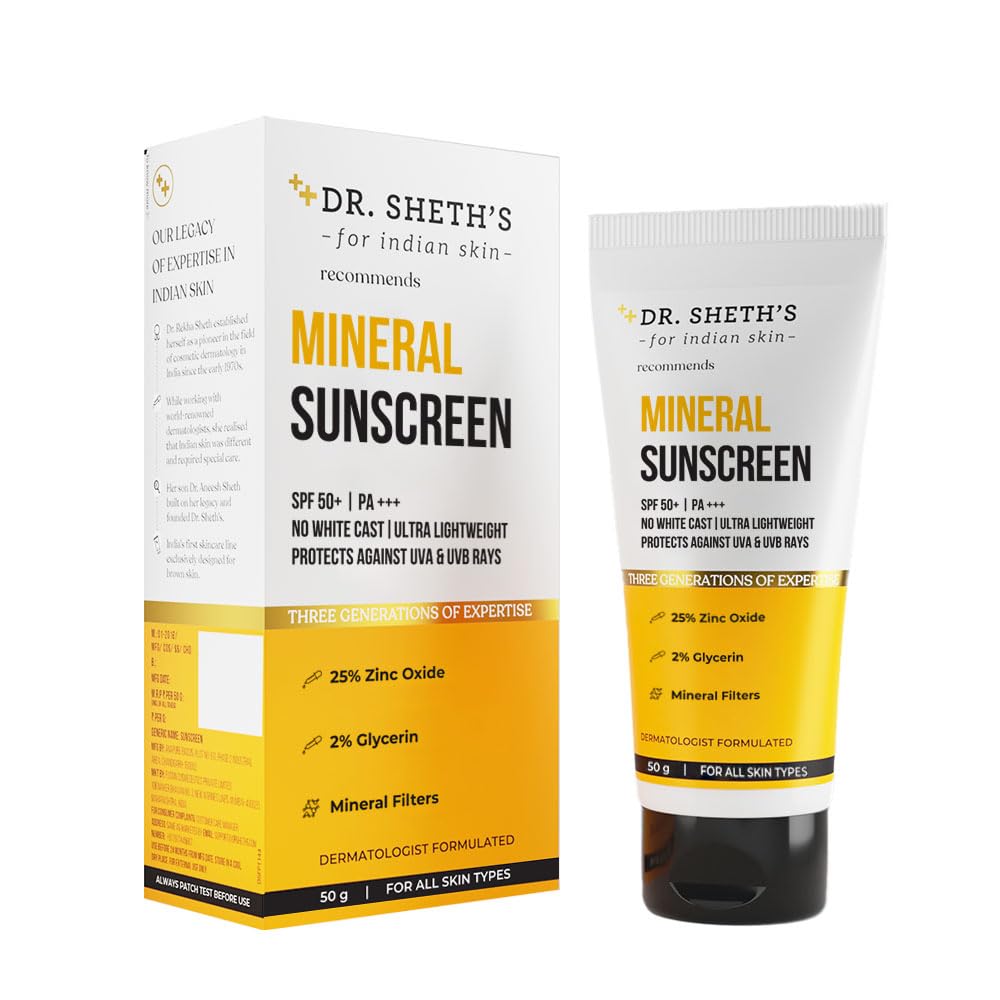
1 / 6Waterproof Mineral Sunscreen SPF 50+
Provides photostable SPF 50+ protection
Most Suitable For
Skin Type Match
Matte · Comedogenic · Photostable
- Highly mattifying
- High SPF 50+
- Photostable mineral filter
- Highly comedogenic
- Lacks visible-light defense
- No antioxidant support
Performance Scores
SPF Level
Excellent
SPF Level
Zinc Oxide provides broad-spectrum UV reflection and absorption, and its distribution is optimized by the dispersing agent Polyhydroxystearic Acid to support the high SPF claim.
Broad Spectrum
Fair
Broad Spectrum
Zinc Oxide provides continuous absorption from 280 nm up to 380-400 nm, though single-mineral formulations typically max out at moderate to strong UVA PFA levels (PA+++).
Sweat Resistance
Excellent
Sweat Resistance
The presence of multiple silicone elastomers and emulsifiers (e.g., Cetyl PEG/PPG-10/1 Dimethicone, Dimethicone/Vinyl Dimethicone Crosspolymer) creates a highly water-resistant film.
Photo Stability
Excellent
Photo Stability
Dermatological and photobiology literature consistently confirm that inorganic filters like Zinc Oxide remain fully photostable under sustained UV radiation.
Visible Light
Poor
Visible Light
Absence of iron oxide color indices (e.g., CI 77491, CI 77492, CI 77499) or pigmentary-grade non-white minerals in the ingredient list.
Irritation Risk
Low Risk
Irritation Risk
Zinc oxide acts as a skin protectant and anti-inflammatory agent, mitigating the low-level irritant potential of the quaternary ammonium preservative.
Pore Clogging
High Risk
Pore Clogging
Clinical evaluations, including Fulton's standardized comedogenicity scale, consistently rate both isostearic acid and sodium chloride as 5/5 for pore-clogging potential in leave-on formulations.
White Cast
High Risk
White Cast
Un-tinted zinc oxide at concentrations sufficient for SPF 50+ consistently produces visible reflectance (ashy/white cast) on Fitzpatrick III-VI skin tones.
Ingredients Analysis
Active Filters
Key Inactive Ingredients
Isostearic Acid Skin Conditioning
Frequently flagged in dermatological databases as having a high comedogenic rating, meaning it has the potential to clog pores and exacerbate acne in susceptible individuals [2.5].
Cyclopentasiloxane Emollient
The European Union is restricting this ingredient to a maximum concentration of one tenth of a percent in leave on cosmetics effective June 2027.
PEG/PPG-18/18 Dimethicone Emulsifier
Because it contains polyethylene glycol and polypropylene glycol it carries a risk of trace contamination with dioxane and ethylene oxide which are toxic byproducts of the manufacturing process [2.1].
PEG-12 Dimethicone/PPG-20 Crosspolymer Sensory Modifier
As an ethoxylated and propoxylated compound, it carries a risk of trace contamination with 1,4-dioxane and ethylene oxide, which are probable human carcinogens [2.1].
Cetyl PEG/PPG-10/1 Dimethicone Emulsifier
Because it contains polyethylene glycol (PEG) and polypropylene glycol (PPG) chains, it carries a potential risk of trace contamination with 1,4-dioxane and ethylene oxide from the ethoxylation manufacturing process.
Sodium Chloride Other
Frequently assigned a high comedogenic rating in dermatological assessments, presenting a credible risk of pore clogging and acne exacerbation in leave-on products.
Caprylyl Glycol Preservative
Generally well tolerated and considered safe for most skin types though rare cases of allergic contact dermatitis have been documented [2.1].
Didecyldimonium Chloride Preservative
Documented as a potential skin sensitizer that can trigger allergic contact dermatitis, especially with prolonged or occupational exposure.